
Lies, damned lies, and Strava statistics

There’s a saying, often attributed to Disraeli, that there’s three types of lies; lies, damned lies, and statistics. I can’t tell you if Disraeli ever said such a thing, but I can tell you it’s been true in my running.
After being frustrated on my Bob Graham attempt in May, I wasted no time getting running again. I was back out within a couple of days. That next weekend I set a target to take a Strava crown on a four mile segment I’d been eyeing up and did so comfortably.
The weekend after that was the Trail Pursuit half marathon, which last minute route changes had turned into a 15 mile technical fell run. Bad news for people who paid in good faith for an accessible trail, good news for gluttons for punishment like myself.
All seemed to be going to plan until a frustrating outing at Blencathra Fell Race, where nothing worked quite as it should. Then the next day I had to bail on an easy paced long run because I couldn’t really run at all. I put it down to having had a cold.

The Blaydon Race, a week later, offered a crack of light. I had sore knees and hadn’t ran on the roads for months, so expectations were low. I throttled up to about 95%, trying to go fast but not my all out, and found I could settle in and hold the pace. The course was about 150m shy but it was a 10km best by almost a minute and a half, comfortably my best road race yet.
The Round’s Walla Dash followed, two nights in a row, and then the quite wonderful Windy Gyle fell race in Northumberland. I wasn’t happy with my performance but again, my stats were decent so I decided it was down to expectations and confidence. I just needed to do something to boost myself.
A day off work. A train to Berwick. A self-supported run on the Northumberland Coastal Trail, clocking in at 106km. It’s an FKT, though more because most people do it supported than any speed on my part. The confidence boost just wouldn’t come though. Life circumstances took over and stress and fatigue were the order of the day.
So I hit the Chevy Chase hard. A voice inside me said ‘don’t race’, so I told the voice to sod off and caught three busses and a train up to Wooler to participate. I went out hard, tried hard, died hard, maintaining PB pace up until Langlee Crags and then blowing up spectacularly. A quick run in from Hell’s Path made the statistics look okay. But I knew.

My body had been at 110% effort to run less than my best. Something wasn’t right. My foot placement was poor. I fell once and came close another time. The brain and body just not quite working together, a feeling I’ve previously only had when taking medication. I could look at Strava and none of the stats were bad. But they were lies of omission. They didn’t show the context of longer recovery times, muscle soreness, lack of energy.
I went away to Scotland last week with a massive amount of fatigue. Whinged my way up Ben Nevis, then got caught in the endorphins of a quick descent. Maybe it was all in my head after all.
And so I rolled the dice one last time and attempted a Mamores Round. Because clearly someone struggling for running confidence and energy should be aiming for ten Munros in one day. Suffice to say it didn’t go well. By the time we hit An Gearanach I was barely running at all and the descent was a sorry state of affairs. I reluctantly bowed to the inevitable; I needed a rest.
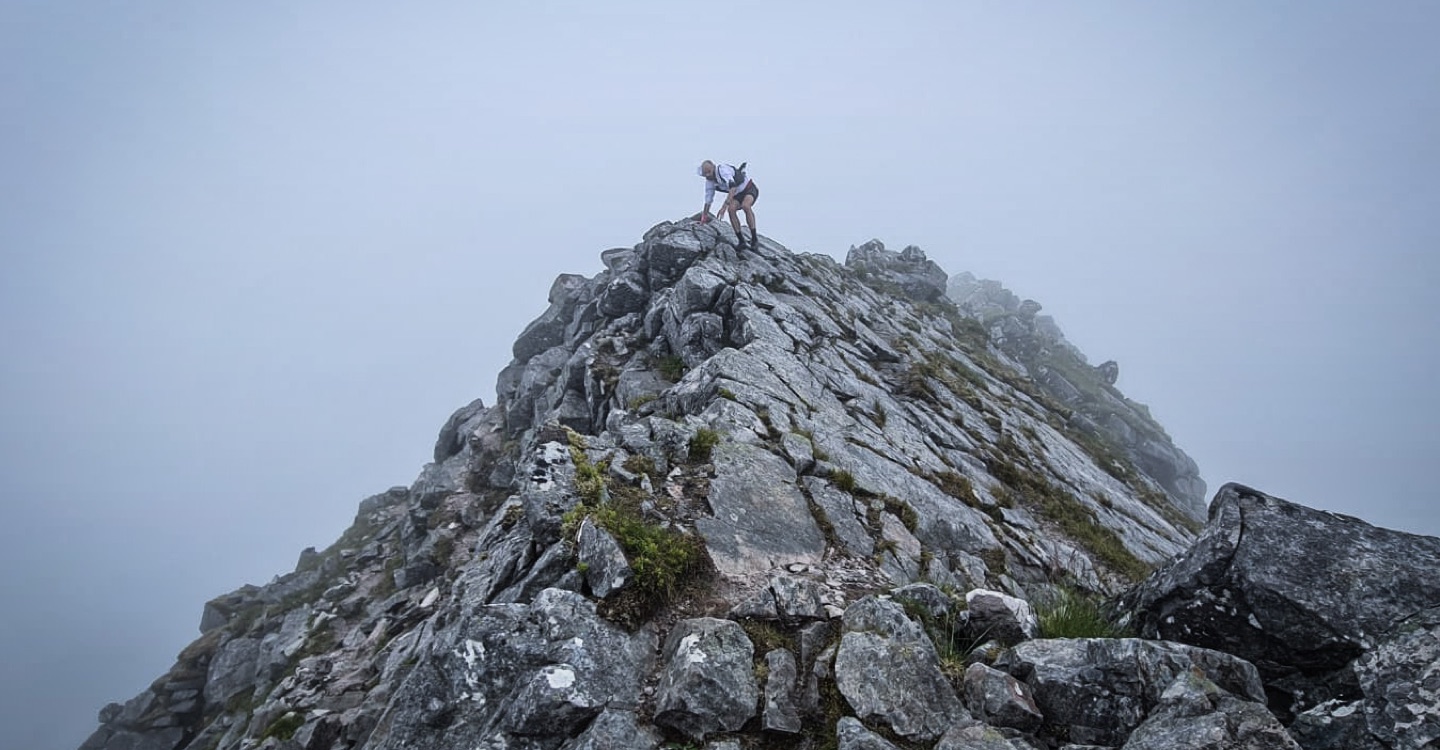
I’ve not ran since, and will do only one or two easy runs before supporting Sarah’s Bob Graham Round this weekend. I’m hoping that a very easy ten days will be enough, that I’ve eventually listened in time before pushing too far into over training territory. Already I’m feeling more positive about running again and looking forward to giving the legs a stretch and my body feels less fatigued.
It’s a much needed lesson to listen to my body, not my Strava. None of my runs were bad in terms of stark statistics, but that shouldn’t be a surprise: I’ve drilled my body for years to be able to do things on bad days.
The body will carry on and may not immediately show a big drop in performance. That’s what we’ve trained our bodies to do. But it will send signals loud and clear that rest is needed.
In the middle of the season rest feels like a compromise, but hopefully a short and good break will do the trick. Not running seems counterintuitive when you want to be in shape for a big race like Tatras Skymarathon in a couple of weeks, but ultimately you can’t toe the line if you’re broken.
There are three types of lie; lies, damned lies, and Strava statistics. Perhaps we could all benefit from listening to them a little less.
Photo credits: Mountain pics from Karolina Wołoszczyk, Blaydon Race pic from Jennifer Hughes, Chevy Chase pic from Iain Robertson